Newsletter Subscribe
Enter your email address below and subscribe to our newsletter


 ByJohn A
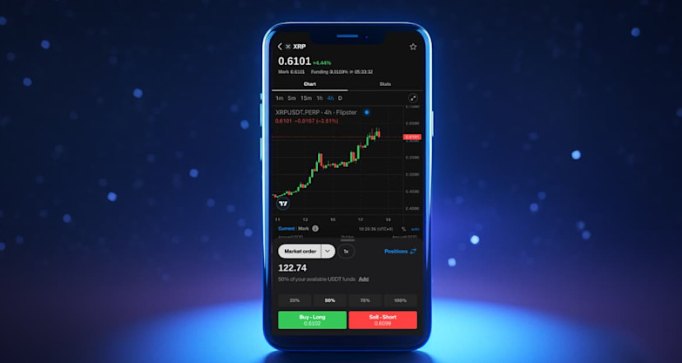
Margin and spot trading in crypto reflect fundamentally different ownership, risk, and cost structures. Spot grants direct asset ownership with capital at risk and no leverage; margin uses borrowed funds secured by collateral, amplifying exposure but raising liquidation risk and funding costs. Leverage can boost gains yet magnify losses, demanding strict risk controls and prudent sizing. Platforms vary in funding, liquidity, and maintenance margins, influencing affordability and risk. A clear framework helps decide, but the trade-offs leave important questions unanswered.
Margin and spot trading are two fundamental methods for participating in cryptocurrency markets.
The distinction centers on capital use, asset ownership, and leverage.
Margin mechanics describe borrowed funds and collateral, while spot trading involves direct ownership without leverage.
Investors compare spot vs margin risks, including liquidation and funding costs, to assess freedom alongside potential returns and capital exposure.
See also: kozpicinzi
Leverage amplifies both potential gains and losses, reshaping risk, reward, and margin requirements in crypto trading.
Engineered exposure changes risk modeling, with volatility-driven incoming alerts affecting liquidation thresholds and funding forecasts.
While capital efficiency improves entry leverage, it increases downside sensitivity, demanding robust risk controls.
Traders weigh amplified returns against forced deleveraging, balancing freedom with disciplined margin management and prudent position sizing.
How do costs, liquidity, and funding mechanisms vary across crypto platforms, and what implications do these differences have for traders? The analysis highlights risk assessment and platform comparison as core activities. Funding costs differ by rate, tenor, and demand, shaping liquidity impact and trading costs. A concise, data-driven view reveals disparities that traders must quantify and monitor.
In light of the prior comparison of costs, liquidity, and funding across platforms, traders can apply a structured framework to decide between margin and spot trading.
The framework emphasizes risk management and emotion control, weighing volatility, leverage caps, and position duration.
For freedom-minded participants, margin is reserved for defined hedges or high-conviction bets; spot suits cautious, medium-term exposure with clear loss limits.
Funding rates significantly affect long-term margin trading profitability; perpetual swaps often incur ongoing costs that can erode returns. In volatile markets, margin funding variability compresses gains, demanding careful risk management, transparent costs, and awareness of funding rate cycles.
“Forewarned is forearmed.” Negative equity can occur in volatile margin positions, as rapid price moves outrun collateral; margin liquidation may trigger quickly. Effective risk management reduces tail risk, but cannot eliminate it for freedom-seeking traders.
Security audits and multi factor authentication characterize platforms with strongest security for leveraged accounts; platforms emphasizing platform liquidity, rigorous risk controls, and ongoing security audits emerge as favorable choices for users seeking freedom and protection.
Tax treatment varies by jurisdiction; margin taxation and spot taxation often differ in treatment of leverage, interest, and deductions, with margins sometimes taxed on gains differently or sooner than spot profits, affecting compliance and reporting for freedom-seeking traders.
Funding intervals vary by exchange, with notable differences in frequency and cut times; some offer hourly settlements while others use daily periods. Exchange variability complicates scheduling, liquidity planning, and risk management for freedom-seeking traders navigating diverse platforms.
In crypto, margin trading amplifies both upside and downside by borrowing funds, while spot trading confers full ownership with limited risk. Leverage often doubles or triples exposure, yet increases liquidation risk and funding costs, underscoring tighter risk controls and position sizing. A striking stat: financing costs can erode returns by 1–2% monthly on high-leverage positions, rivaling small price swings. Ultimately, the choice hinges on risk appetite, horizon, and cost sensitivity, with a disciplined framework guiding venue and instrument selection.